构建复杂的AI应用,特别是处理多模态输入并需要实时响应的应用,经常感觉像是在拼装复杂拼图:需要将不同的数据处理步骤、异步API调用和自定义逻辑拼接在一起。随着复杂性的增长,这可能导致脆弱、难以维护的代码。2025年7月,Google DeepMind发布了GenAI Processors,这是一个专为解决这些技术挑战而设计的开源Python库。GenAI Processors的核心创新在于其ProcessorParts数据结构。每个ProcessorPart可以被视为标准化的数据部分(例如,音频块、文本转录、图像帧),它们携带相关的元数据在管道中流动。这种设计有几个关键技术优势:class ProcessorPart: content: ProcessorContent # 实际数据载荷 metadata: Dict[str, Any] # 元数据字典 mime_type: str # MIME类型标识 timestamp: float # 时间戳 sequence_id: str # 序列标识符
- 异步流处理能力库提供了用于分割、连接和合并ProcessorParts异步流的实用工具。这意味着数据可以在不阻塞主线程的情况下连续处理:
async def process_stream(input_stream: AsyncIterator[ProcessorPart]) -> AsyncIterator[ProcessorPart]: async for part in input_stream: # 处理每个部分 processed_part = await transform_part(part) yield processed_part
- 双向流控制与传统的单向数据流不同,GenAI Processors支持双向流控制,允许下游处理器向上游发送反馈信息
class BidirectionalProcessor: async def process(self, input_stream, feedback_stream): # 同时处理输入和反馈 async for input_part, feedback_part in zip(input_stream, feedback_stream): result = await self.handle_with_feedback(input_part, feedback_part) yield result
每个Processor都实现了标准接口,这提供了强大的组合能力:class Processor(ABC): @abstractmethod async def process(self, input_stream: AsyncIterator[ProcessorPart]) -> AsyncIterator[ProcessorPart]: pass def __call__(self, input_stream): return self.process(input_stream)
# 处理链组合audio_processor = AudioTranscriber()text_processor = TextAnalyzer()response_generator = ResponseGenerator()# 链式处理async def process_audio_input(audio_stream): transcribed = audio_processor(audio_stream) analyzed = text_processor(transcribed) responses = response_generator(analyzed) return responses
GenAI Processors库需要Python 3.10+。这个版本要求确保了对现代异步特性的完全支持:pip install genai-processors核心模块core/目录包含一组基本处理器,可以在你自己的应用程序中使用。它包括大多数实时应用程序所需的通用构建块。- AudioProcessor: 处理音频数据的专用处理器
- ModelProcessor: 与AI模型交互的处理器
- StreamSplitter: 将单一流分割为多个并行流
- FilterProcessor: 基于条件过滤数据
- TransformProcessor: 数据格式转换
该库提供了与Google Gemini API的现成连接器,包括同步的基于文本的调用和用于流式应用的Gemini Live API。1. 同步文本处理from genai_processors.models import GeminiTextProcessortext_processor = GeminiTextProcessor( model_name="gemini-pro", api_key="your-api-key", temperature=0.7, max_tokens=1000)async def process_text_query(query: str): input_part = ProcessorPart( content=TextContent(query), metadata={"user_id": "123", "session_id": "abc"} ) async for response_part in text_processor(async_iter([input_part])): return response_part.content.text2. Live API流式处理from genai_processors.models import GeminiLiveProcessorlive_processor = GeminiLiveProcessor( model_name="gemini-live", api_key="your-api-key", streaming=True, real_time_factor=1.0)async def handle_live_audio(audio_stream): async for audio_chunk in audio_stream: input_part = ProcessorPart( content=AudioContent(audio_chunk), metadata={"format": "wav", "sample_rate": 16000} ) async for response in live_processor(async_iter([input_part])): if response.content.type == "audio": yield response.content.audio_data elif response.content.type == "text": print(f"Transcription: {response.content.text}")GenAI Processors的异步设计带来了几个关键的性能优势:1. 非阻塞I/O处理传统的同步处理在等待API响应时会阻塞整个线程。GenAI Processors通过异步设计避免了这个问题:class AsyncModelProcessor: async def process_batch(self, inputs: List[ProcessorPart]): # 并发处理多个输入 tasks = [self.process_single(input_part) for input_part in inputs] results = await asyncio.gather(*tasks) return results async def process_single(self, input_part: ProcessorPart): # 异步API调用 async with aiohttp.ClientSession() as session: response = await session.post(self.api_endpoint, json=input_part.to_dict()) return ProcessorPart.from_response(await response.json())
2. 只需几行代码即可使用 Gemini Live API 轻松构建能够实时处理音频和视频流的“Live Agent”。在以下示例中,使用 + 运算符组合输入源和处理步骤,从而创建清晰的数据流from genai_processors.core import audio_io, live_model, video# Input processor: combines camera streams and audio streamsinput_processor = video.VideoIn() + audio_io.PyAudioIn(...)# Output processor: plays the audio parts. Handles interruptions and pauses# audio output when the user is speaking.play_output = audio_io.PyAudioOut(...)# Gemini Live API processorlive_processor = live_model.LiveProcessor(...)# Compose the agent: mic+camera -> Gemini Live API -> play audiolive_processor = live_model.LiveProcessor(...)live_agent = input_processor + live_processor + play_outputasync for part in live_agent(streams.endless_stream()): # Process the output parts (e.g., print transcription, model output, metadata) print(part)
class BatchProcessor: def __init__(self, batch_size: int = 32, max_concurrency: int = 10): self.batch_size = batch_size self.semaphore = asyncio.Semaphore(max_concurrency) async def process_batch(self, input_stream): batch = [] async for item in input_stream: batch.append(item) if len(batch) >= self.batch_size: async with self.semaphore: results = await self.process_batch_items(batch) for result in results: yield result batch = [] if batch: async with self.semaphore: results = await self.process_batch_items(batch) for result in results: yield result
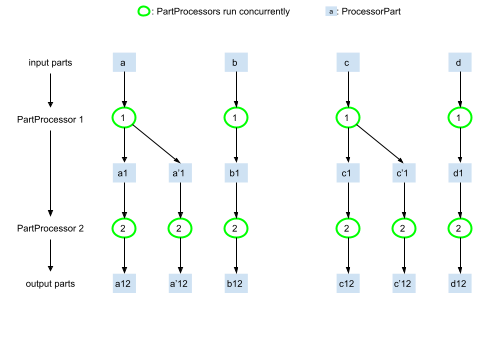
GenAI Processors实现了智能的背压控制机制和内存管理和资源清理,当然它也支持自定义Processor。创建自定义处理器的典型步骤包括创建Processor或PartProcessor,class CustomAudioProcessor(Processor): def __init__(self, model_path: str, config: Dict[str, Any]): self.model = load_model(model_path) self.config = config async def process(self, input_stream: AsyncIterator[ProcessorPart]) -> AsyncIterator[ProcessorPart]: async for part in input_stream: # 验证输入类型 if not isinstance(part.content, AudioContent): raise ValueError(f"Expected AudioContent, got {type(part.content)}") audio_data = await self.preprocess_audio(part.content.audio_data) result = await self.model.predict(audio_data) # 创建输出ProcessorPart output_part = ProcessorPart( content=TextContent(result.transcription), metadata={ **part.metadata, 'confidence': result.confidence, 'processing_time': result.processing_time } ) yield output_part async def preprocess_audio(self, audio_data: bytes) -> np.ndarray: # 音频预处理逻辑 audio_array = np.frombuffer(audio_data, dtype=np.int16) # 标准化 audio_array = audio_array.astype(np.float32) / 32768.0 # 重采样到目标频率 if self.config.get('target_sample_rate'): audio_array = resample(audio_array, self.config['target_sample_rate']) return audio_arrayPartProcessor的高级用法对于需要更细粒度控制的场景,可以使用PartProcessor:class AdvancedPartProcessor(PartProcessor): async def process_part(self, part: ProcessorPart) -> AsyncIterator[ProcessorPart]: # 检查是否需要分割大型数据 if part.content.size > self.max_chunk_size: # 分割为较小的块 chunks = await self.split_content(part.content) for i, chunk in enumerate(chunks): chunk_part = ProcessorPart( content=chunk, metadata={ **part.metadata, 'chunk_index': i, 'total_chunks': len(chunks) } ) processed_chunk = await self.process_chunk(chunk_part) yield processed_chunk else: # 直接处理小数据 result = await self.process_single_part(part) yield result与现有技术的深度对比,相比Apache Kafka Streams而言,它是AI原生设计,专门为AI工作负载设计,内置了对多模态数据和AI模型的支持,Kafka Streams需要额外的适配层来处理AI特定的数据类型GenAI Processors通过其创新的ProcessorParts流式架构和统一的Processor接口,为AI应用开发提供了一个强大而灵活的基础设施。这些"模型处理器"抽象了批处理、上下文管理和流式I/O的复杂性,使得交互式系统的快速原型开发成为可能。